Cave Muggesane · Muggia, Trieste
The sandstone that paved history.
We quarry and work sandstone from our own site, from the quarry face to the building site — the same stone that today paves some of north-east Italy's most recognisable places.
Request a quote10
Documented references
100%
Stone from our own quarry
2000
Years of quarrying in Muggia
Configurator
Which product do you need?
Three questions and we will tell you where to start. Under a minute.
Our suggestion
- Indicative thickness
- Suitable finishes
- Why
An indicative suggestion, not a specification: thickness and finish must be checked against the real project — loads, substrate and use. Get in touch and we will confirm them together.
See examples of stairs, walls and paving for private homes →
From quarry to site
The process
- 01
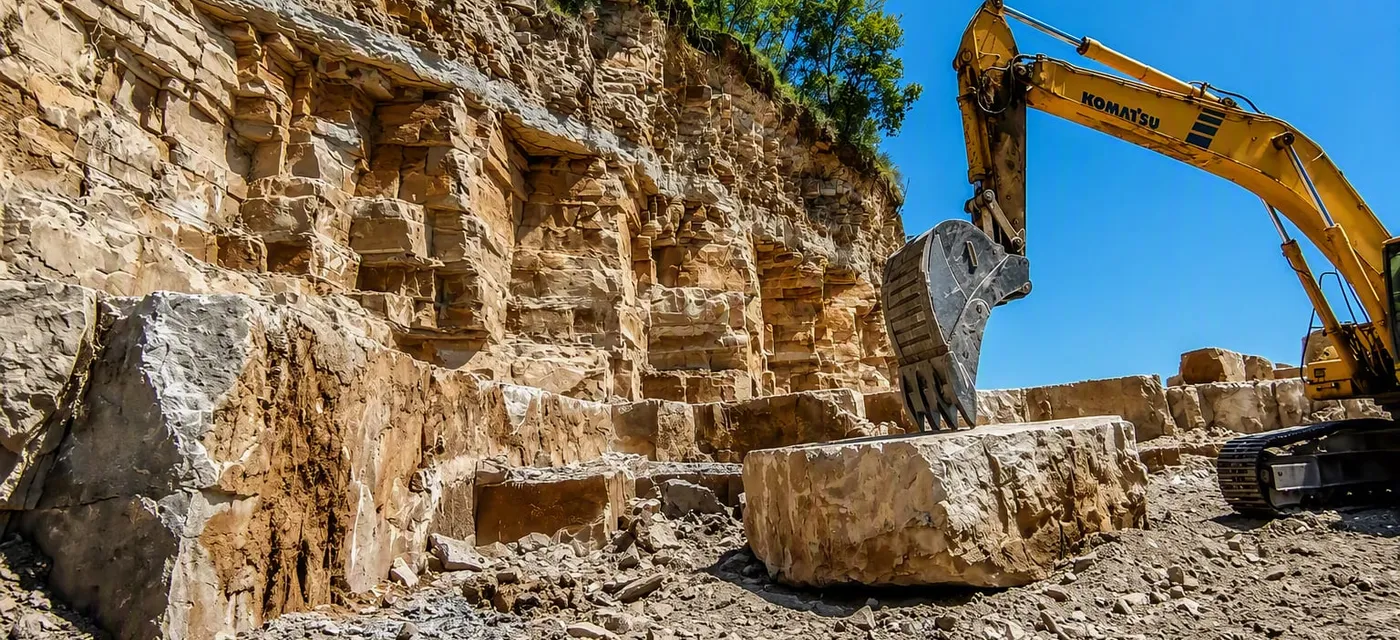
Extraction
The block is cut from the quarry face at Renice, where stone has been quarried for over two millennia.
- 02
Working
Traditional splitting or industrial sawing, depending on where the stone is destined.
- 03
Finishing
Flaming, bush-hammering, sandblasting, honing or pointing: the surface decides the character.
- 04
Laying
The slab reaches the site ready for the laying pattern set out in the project.
What clients say
Customer reviews
★★★★★“Ottima esperienza con Renice Cava. Azienda seria e professionale, con una ottima scelta di pietre e materiali di qualità.”
Rosy Gerbino — Google review, luglio 2026
★★★★★“Impegno, competenza e amore per questo lavoro da parte di tutto il personale. Artigiani con la "A" maiuscola.”
R. S. — Google review, 2018
Reviews are shown in the original Italian.
FAQ
The questions we are asked most
Is the stone certified?
Yes. Masegno di Muggia carries CE marking under EN 1341, EN 1342 and EN 1343:2001. The full laboratory values are published on The Sandstone page: breaking load 22.2 MPa, compressive strength 180.16 MPa, and 0% variation after 48 freeze-thaw cycles.
Is it suitable for outdoor use and freezing climates?
Yes, and that is its most typical use. The siliceous binder makes it insoluble in water, and CE testing shows 0% variation in breaking load after 48 freeze-thaw cycles. It also never polishes through wear, so it stays slip-resistant for its whole service life.
What products do you make?
Split wall stone (3–12 cm) and bugnatello (2.5 cm) for cladding; setts 8×8 and 10×10, binderi, sawn paving from 1.5 to 8 cm and palladiana for paving; kerbs 8×10 and 15×25. Plus bespoke pieces: thresholds, sills, stairs, jambs, copings and capitals. Available finishes are flaming, bush-hammering, sandblasting, honing and pointing.
Where does the stone come from?
From our own quarries in the Noghere area of Muggia, near Trieste. It is the same stone quarried here for over two millennia — the Romans used it for the theatre of Tergeste and the roads of Aquileia — and it has paved around 80 Italian squares, from Mestre to Marano.
Do you have heritage references?
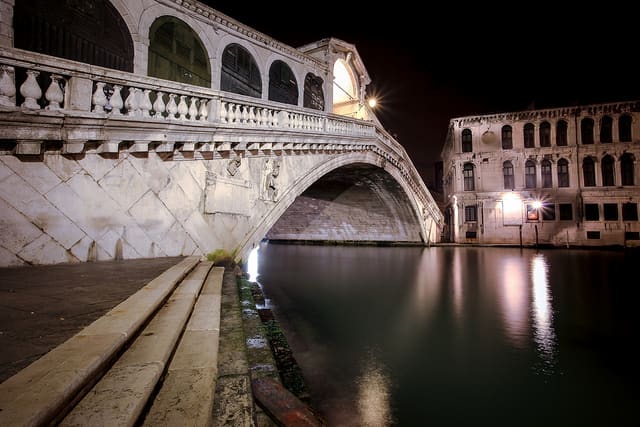
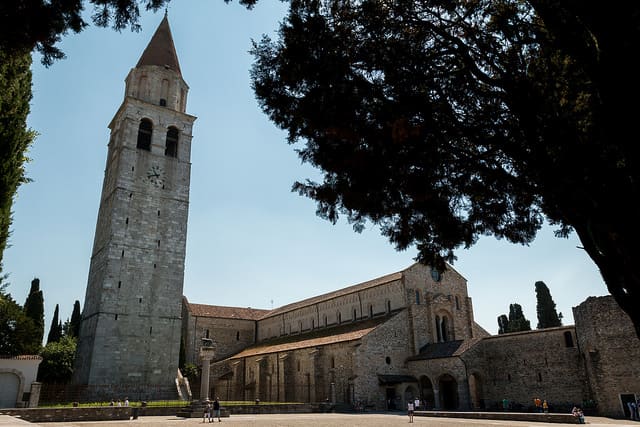
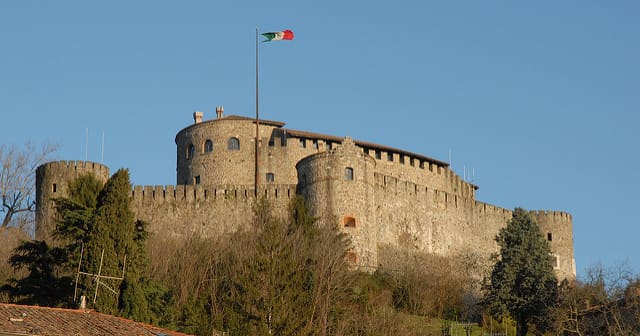
Yes. In 2016–2017 sandstone from our quarries was used in the restoration of the Rialto Bridge in Venice, for around 200 m². Other references include the Basilica of Aquileia, San Giusto Castle, the Monte Grisa sanctuary and several squares in Trieste and Muggia.
Contact
Request a quote
Tell us about your project and we will come back with an assessment of material and lead times.